Bitcoin Speculation VS AI
How AI absorbed the speculative energy that once powered Bitcoin's four-year-cycles, and why bitcoin is transitioning from frontier tech trade to reserve asset.

Bitcoin & Markets | May 26, 2026
Exploring the intersection of bitcoin, macroeconomics, markets, biology, and politics within the evolving global order.
Bitcoin Lost Its Hold On Futurism
For most of the last decade, bitcoin represented the future. The slogans like "Bitcoin fixes this," and “bitcoin is the future of finance” were a driving force. The altcoin sector, what I like to call digital fools' gold, expanded the vision further into claims that blockchains would revolutionize every industry. Banking, gaming, social media, cloud computing, identity, contracts, and governance were all supposedly about to move on-chain.
Of course, I pushed back hard on the altcoin extraordinary claims as impossible and outright scams, but I did not push back on the "Bitcoin fixes this" meme. As a sound-money economist, I still believe the form of money has broad social and economic consequences, but the broader "crypto" vision proved wildly overstated.
The breakthrough was much narrower and much more profound. It was not that we were going to "blockchain all the things," the real innovation was digital scarcity itself. Bitcoin solved the problem of creating a scarce digital bearer asset without centralized control. Everything else was largely speculative layering built on top of that core breakthrough.
Digital scarcity is not sexy. Claims of revolutionary tech are. Investors were really buying futurism, exponential technology, digital civilization, and massive upside. Bitcoin (and crypto) became the market's dominant frontier narrative.
That all changed in the last few years with commercial LLM models everyone can use. That futurism hype shifted from bitcoin et. al. to AI, semiconductors, and data center infrastructure. The "future trade" rotated wholesale away from "crypto" to AI.
This matters because speculative capital is finite. Markets usually consolidate around one dominant frontier narrative at a time, absorbing the most imagination, momentum, and marginal risk capital. During the late 2010s and early 2020s, crypto held that position. Today, AI does.
Bitcoin Between Frontier Technology And Reserve Asset
Perhaps we're prematurely framing bitcoin as in direct competition with gold. Structurally, bitcoin still behaves far more like a frontier technology asset than a mature reserve asset. But that's shifting.
Bitcoin still competes heavily with growth optimism, technological enthusiasm, and speculative future-oriented capital allocation. But Bitcoin has lost a lot of the speculative bandwidth now occupied by AI infrastructure, semiconductors, and frontier technology narratives.
Bitcoin has been gradually evolving beyond pure frontier speculation for several years. Sorry, but I have to bring up the massive scam Terra Luna and FTX. At the height of the 2020-2021 cycle, the scams began adding bitcoin to reserves to bolster trust with the public. Even bitcoin couldn't save them, but this was the sign of the beginning of the end of the scammy frontier tech era and the beginning of the reserve asset era.
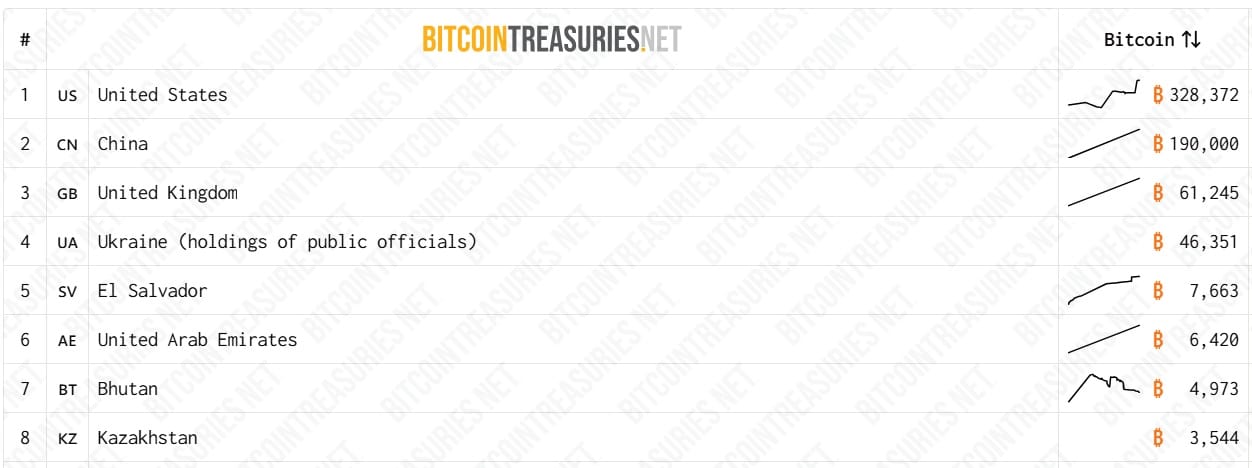
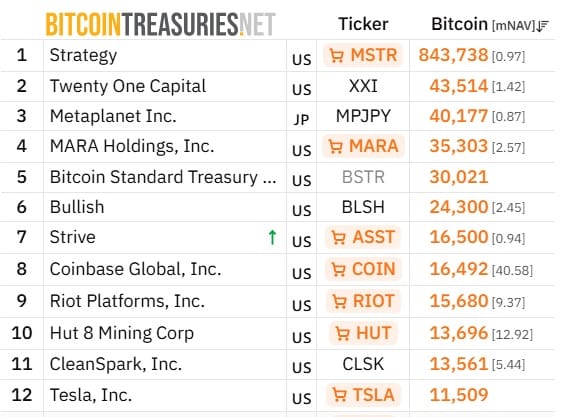
Today, there are eight countries with over 1000 BTC, twelve public companies have more that 10,000 BTC, and Blackrock's bitcoin ETF IBIT holds almost 4% of all BTC, about 811,000.
And in a hugely telling development, recent reports surrounding Iran's acceptance of fees to transit the Strait of Hormuz to be paid in BTC. All this shows an asset increasingly functioning as geopolitical monetary infrastructure rather than merely a speculative technology trade.
As we continue down the road of deglobalization and demographic decline, savings tech is going to be more and more important.
Tailwinds Return To Bitcoin
Bitcoin definitely has the growing bid as a reserve asset, but frontier tech bid might also be returning.
Recent commentary from major corporations questioning AI economics, infrastructure costs, and productivity outcomes suggests the market may be transitioning from narrative expansion toward economic scrutiny. An important question is starting to be asked, whether the economics justify current expectations and valuations.

The timing here may be extremely important. Just as the AI trade begins facing growing scrutiny over economics, infrastructure costs, and monetization, global industrial conditions may be turning higher again. PMI indicators are beginning to expand, energy fears surrounding Hormuz may ease, and a broader peace or stabilization dividend could emerge.
Bitcoin no longer monopolizes speculative futurism the way it once did. But if the AI trade cools while global liquidity, industrial expansion, and geopolitical stabilization improve simultaneously, bitcoin could benefit from both sides of its evolving identity: reserve asset accumulation and returning frontier-tech speculation.
HODL strong. Thanks for reading! PLEASE SHARE!
A
- Podcast links and Socials
- Disclaimer
- Feedback form
- Original charts and analysis are CC-BY