Quantum Panic, No Real Threat To Bitcoin
Theoretical math based on theoretical assumptions. The new paper assumes solved engineering, ignores real-world limits, and fuels incentives for premature conclusions.
Bitcoin & Markets | Apr 1, 2026
Exploring the intersection of bitcoin, macroeconomics, markets, biology, and politics within the evolving global order.
The latest quantum FUD about breaking Bitcoin is purely theoretical math. It represents no advancement in physical quantum computing.
I’ve written about this before in The Case Against Quantum Computing and my popular Forbes post on Bitcoin and quantum security, and so has Adrian Morris of MSTR True North. Read those after this short post.
What the Paper Claims
The Google paper does not claim a working quantum attack on Bitcoin. It presents improved resource estimates for breaking elliptic curve cryptography under a set of theoretical assumptions.
At a high level, the paper claims:
- Reduced requirement to ~1200–1500 logical qubits
- Reduced quantum gate operations to tens of millions
- Reduced execution times measured in minutes
- Would enable “on-spend” attacks within Bitcoin’s transaction window
- Physical qubit requirement reduced to 500,000
Under optimized conditions, the authors argue the attack could be performed with far fewer resources than previously estimated. However, the paper is explicit that these results are theoretical constructions based on assumed architectures, not demonstrated capability. The estimates are supported by a zero-knowledge proof of the math, but no full circuits are published and no attack is executed on any real system.
The entire result rests on a critical assumption: that the hardest problems in quantum computing have already been solved.
The Actual State of Quantum Computing
Anywhere you see “logical qubits,” you are looking at theoretical math, not actual computing. That is a major red flag.
Logical qubit: A stabilized qubit built from many unstable physical qubits using error correction.
There are no fully functional logical qubits in existence today. We have proof-of-concept demonstrations, not fully functional compute units.
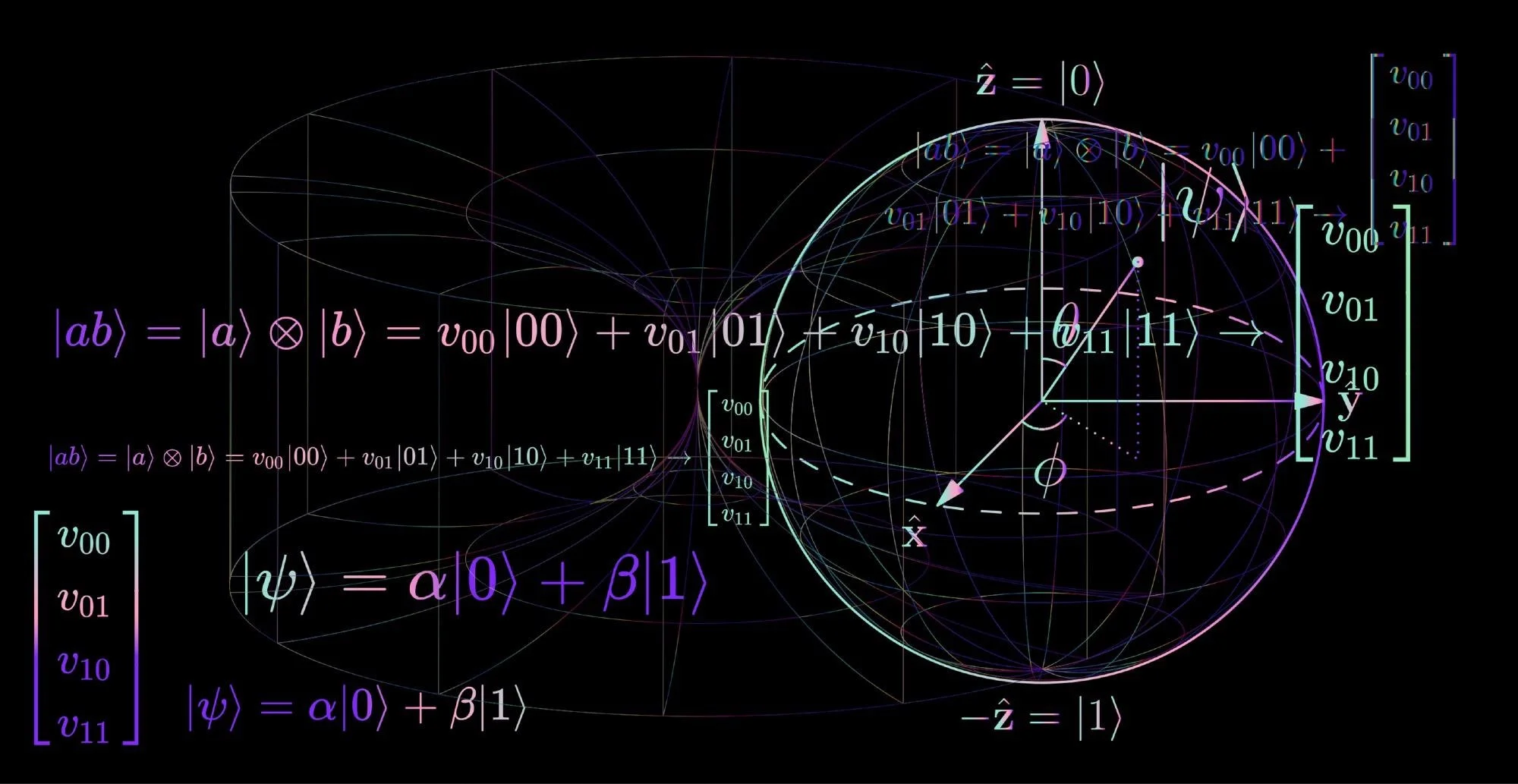
Right now, quantum computers operate with physical qubits, not the clean, error-free logical qubits assumed in all these estimates. Physical qubits are noisy, unstable, and extremely short-lived. They lose their state quickly, require constant error correction, and cannot yet be scaled reliably, if ever.
There is also no consensus on a viable architecture. Competing approaches like superconducting, trapped ions, photonic, and neutral atom systems all involve tradeoffs, and none have demonstrated a clear path to scalable, fault-tolerant systems. In other words, we do not yet know what a workable large-scale quantum computer even looks like.
Superconducting qubits are fast but noisy. Trapped ions are more stable but slower. Photonic systems promise scalability but remain experimental. Neutral atoms offer another path, but face unresolved control challenges. Each approach solves one problem while introducing another. None have demonstrated the ability to scale into a fault-tolerant, cryptographically relevant system.
The field is still searching for a viable foundation. The paper assumes this hurdle away and focuses on the math in an idealized world.
Conflict of Interest
It’s worth noting who is behind some of this work. Justin Drake is a co-author of the paper and a long-time Ethereum researcher and member of the Ethereum Foundation.
Drake is openly critical of Proof-of-Work, and his work tends to emphasize risks and limitations in systems like Bitcoin while highlighting the need for faster evolution and upgrades. That perspective will cause hasty conclusions and interpretations in the direction of that bias. It also reflects a persistent prior assumption that quantum computing will see rapid improvement, despite limited empirical evidence to support that pace.

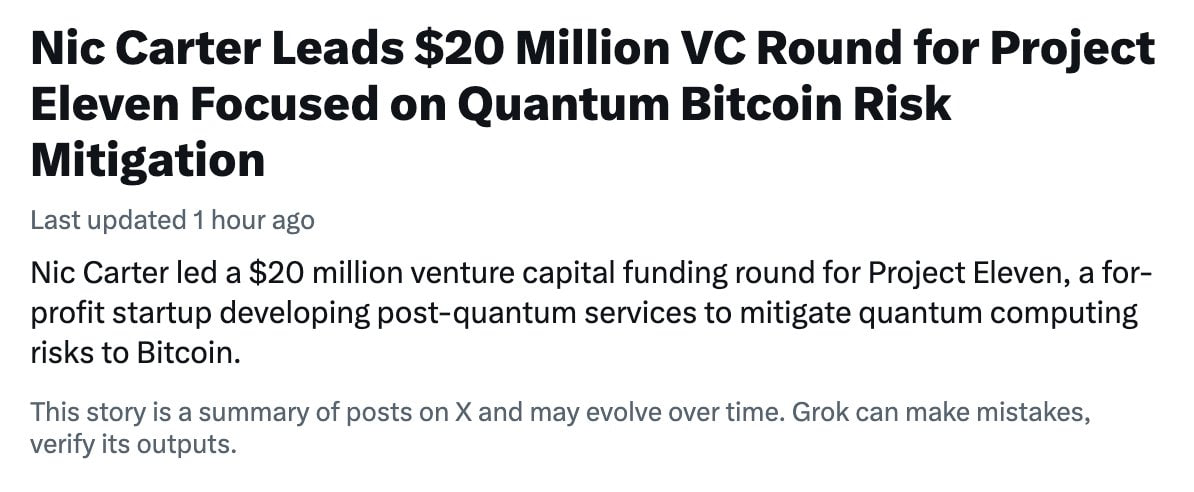
Some of the most vocal proponents warning about quantum risk benefit financially from amplifying it. It has recently come to light that one of the most prominent promoters of this risk, Nic Carter, led a $20 million funding round into a startup focused on quantum risk mitigation for Bitcoin.
Second-order Quantum Risk
Quantum FUD can be used to pressure hasty upgrades that threaten consensus and decentralization.
If the narrative convinces people that Bitcoin is “about to break,” the natural response is urgency. That urgency can distort incentives and push the network toward rushed changes, unvetted cryptographic schemes, and tradeoffs that have not been fully understood. Worst of all, it risks introducing new centralizing pressures on nodes.
The irony is that the paper itself warns about this dynamic. Overstated or unsubstantiated claims can undermine confidence and complicate responsible decision-making, not just inform it.
The greater risk today is not quantum computers. It is reacting to them too quickly.
HODL strong. Thanks for reading! PLEASE SHARE!
A
- Podcast links and Socials
- Disclaimer
- Feedback form
- Original charts and analysis are CC-BY