Bitcoin Is Boring, But Smart Money Is Turning Bullish
After years of price frustration, CME futures data show large reportable traders moving net long while smaller traders take the other side.

Bitcoin & Markets | August 11, 2026
Independent bitcoin analyst of 12+ years, exploring bitcoin and monetary evolution. Subscribe today, and please consider joining the Pro tier!
Make sure to sign up for the Pro tier to receive my weekly Rogue Missive every Friday, covering the most important macro developments shaping markets around the world.
HODL Through the Bitcoin Boredom
I’m still here. You’re still here. We all know the score with the bitcoin price right now. It’s not fun. It’s not good. We’ve been stuck around the same price since April 2021. More than five years, guys.
But hold tight. Don’t lose faith. These are the periods that earn your future gains.
Everyone thinks holding is easy. It’s not, and it’s only getting harder.
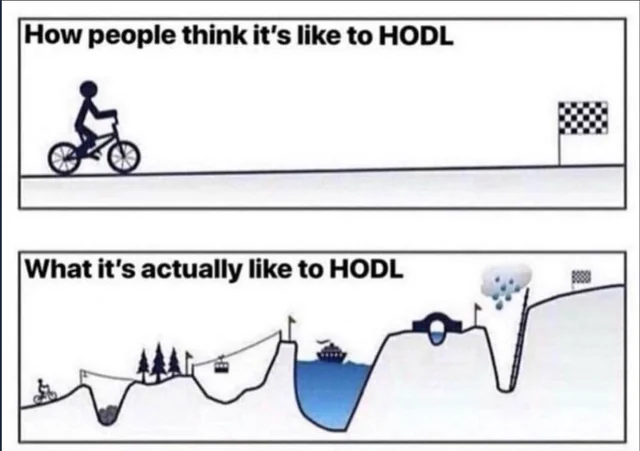
One consolation from this prolonged boredom is that altcoiners are getting hit even harder than bitcoiners. I don’t want to see anyone suffer, but for altcoin scams to die, someone has to be left holding the bag.
Altcoins Harder Hit By AI
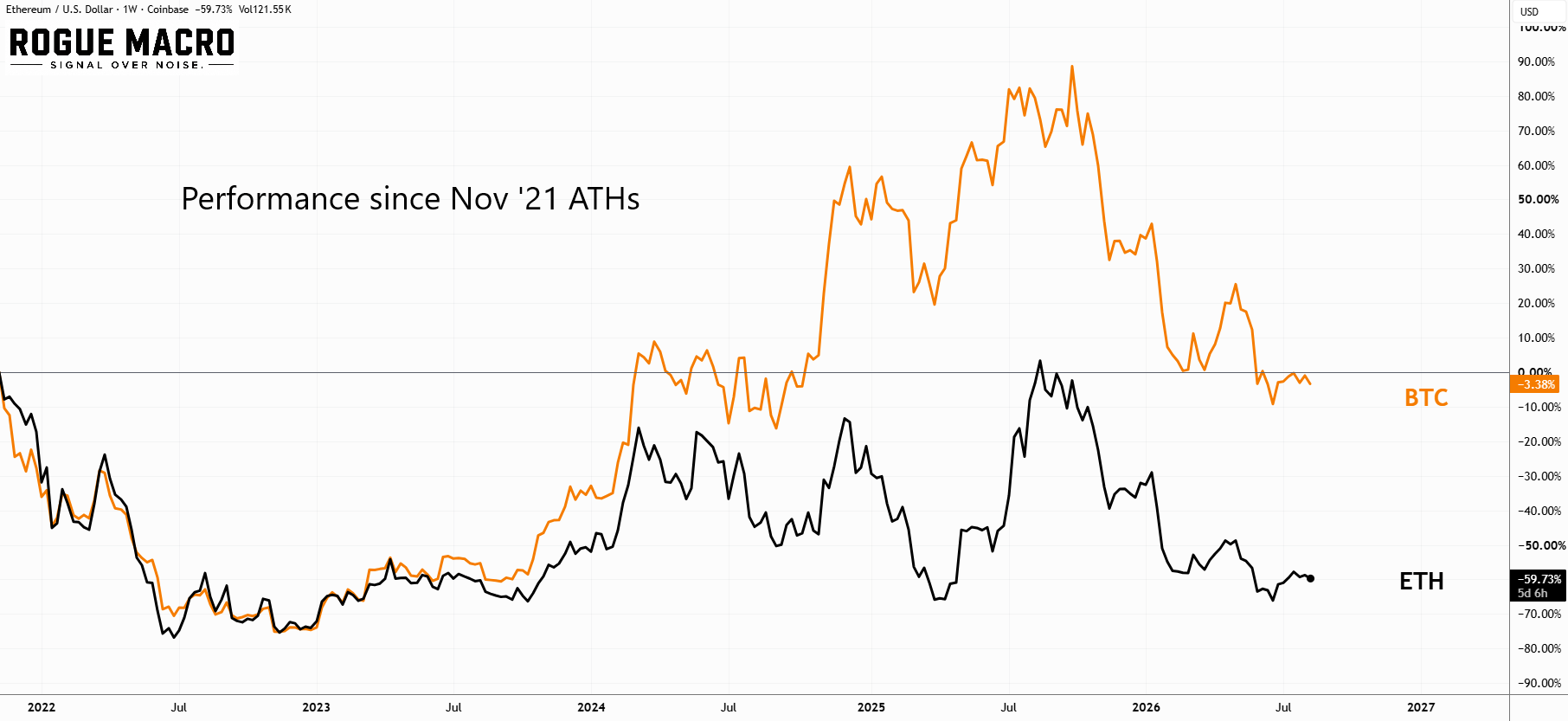
I’ve noticed a small amount of bullishness returning to the Ethereum crowd, though that might be because Tom Lee keeps showing up in my feed. Ethereum has been trapped in a range since 2021. At least bitcoin had a bull market and reached a new all-time high during that period. ETH is still nearly 70% below its dollar-denominated all-time high.
To be honest, many of the scam narratives once pushed by altcoiners can now be found in AI. That is one small reason I’m not extremely bullish on AI. My spidey sense starts going off when I hear people making extraordinary promises about an emerging technology.
I see very little chance that altcoins can recover their old momentum from AI. Bitcoin is different because its value does not depend on promises. It already delivers a fixed supply of 21 million, a global settlement network producing a block roughly every 10 minutes, and strong censorship resistance.
Bitcoin Price Stagnation Is Testing Everyone
Bitcoin itself has been a major disappointment over the period shown in the chart above. The community and audience for bitcoin content have plummeted over the last two years.
I’m a very small content producer, but even large podcasts in the space, such as TFTC, are struggling to get 50 likes on a tweet. I assume their podcast numbers have been similarly affected.
Retail investors are nowhere to be found, and they haven’t been for years. What people call the “last cycle” was almost devoid of retail interest. Price was pushed primarily by institutional demand.
Institutional Demand Is Changing Bitcoin’s Cycle
That new and much deeper source of demand is going to create different market patterns. We will likely see more influence from quarterly allocations, year-end reporting, portfolio rebalancing, and general macroeconomic conditions.
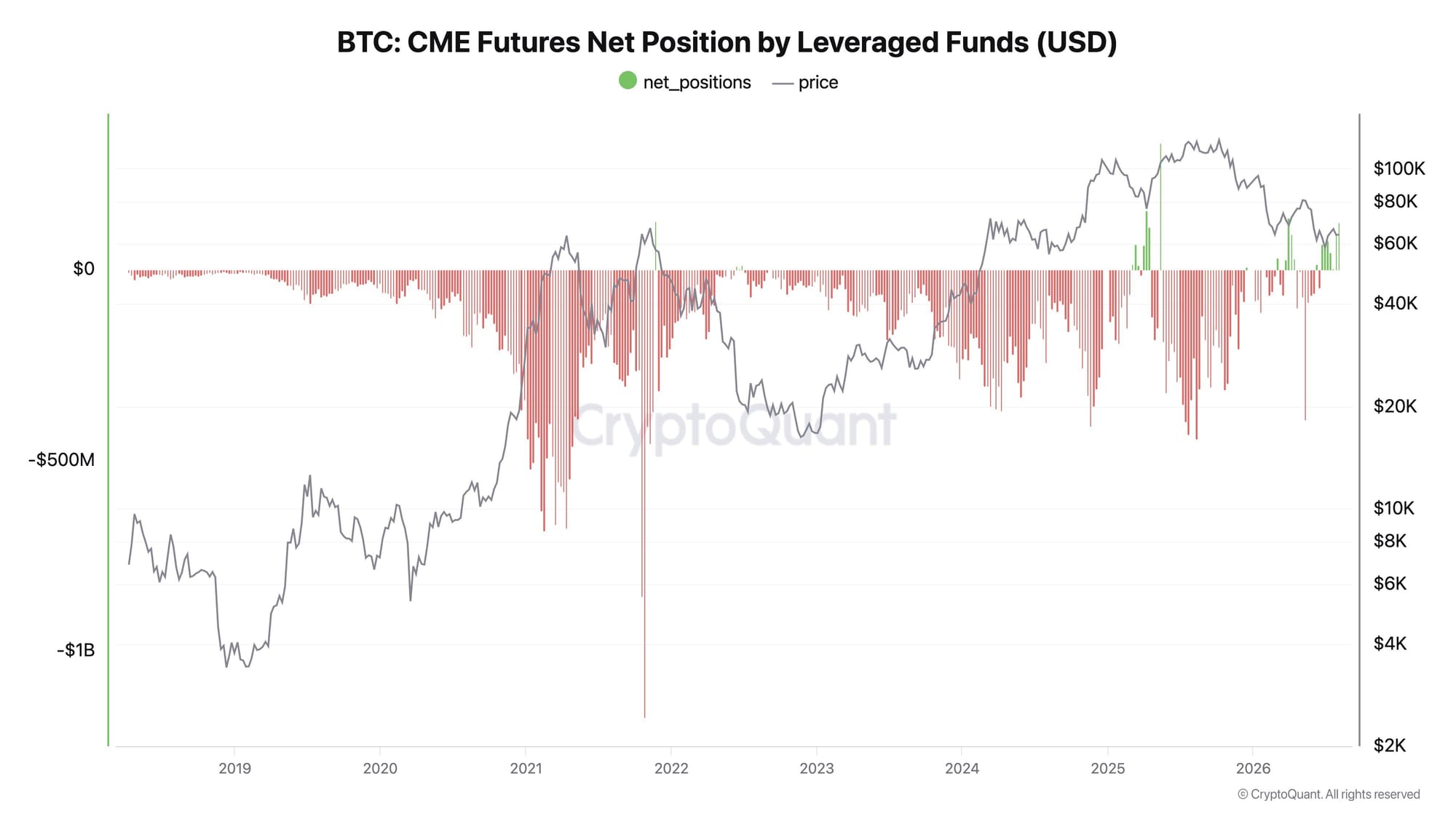
That brings us to our chart of the day, which uses data from the CME Commitment of Traders report for bitcoin futures.
CME Bitcoin Futures: Reportable Traders Turn Net Long
The chart below shows the net position of all reportable traders (it's mislabeled as only leveraged funds).
“Reportable traders” combines dealers, asset managers, leveraged funds, and other large traders whose positions exceed the CFTC’s reporting threshold. When the bars are green, these large traders collectively hold more long contracts than short contracts.
Because every futures contract has both a long and a short side, nonreportable traders must be net short by the same amount. These are generally smaller traders, although the CFTC does not identify them or classify them all as retail.
This does not mean every institutional category is bullish. We have to break the numbers down further to determine that.
Leveraged funds, which primarily include hedge funds, commodity-trading advisers, and similar professional firms, remain heavily net short. Much of that position is likely connected to basis trades rather than an outright bet against bitcoin.
A fund can buy spot bitcoin or an ETF while selling CME futures at a premium. As the futures contract approaches expiration, its price converges with spot, allowing the fund to capture the difference while remaining largely neutral to bitcoin’s direction. Dealers may also use futures to offset client exposure, while other institutions may hedge bitcoin held elsewhere on their balance sheets or in client portfolios.
Are Large Traders Buying the Bitcoin Lows?
What has changed is the balance among these groups. The long positions held by dealers, asset managers, and other reportable traders now exceed the shorts held by leveraged funds, leaving reportable traders net long as a whole.
This net-long positioning has recently appeared around bitcoin lows, including April 2025, February 2026, and the present period. Three observations do not establish a permanent relationship, but the pattern is worth watching.
At the very least, it tells us that larger reportable traders are now collectively net long while smaller, nonreportable traders hold the offsetting net-short position. The so-called smart money is leaning long while smaller traders are betting against bitcoin.
That's it for this short update. Thanks for your support, and please share this with anyone you think would find it valuable.
HODL strong. Thanks for reading! PLEASE SHARE!
A
- Podcast links and Socials
- Disclaimer
- Feedback form
- Original charts and analysis are CC-BY