Bitcoin And Energy Conservation
Bitcoin is not energy, but the conserved economic consequence of irreversible energy expenditure, carried through time and space.
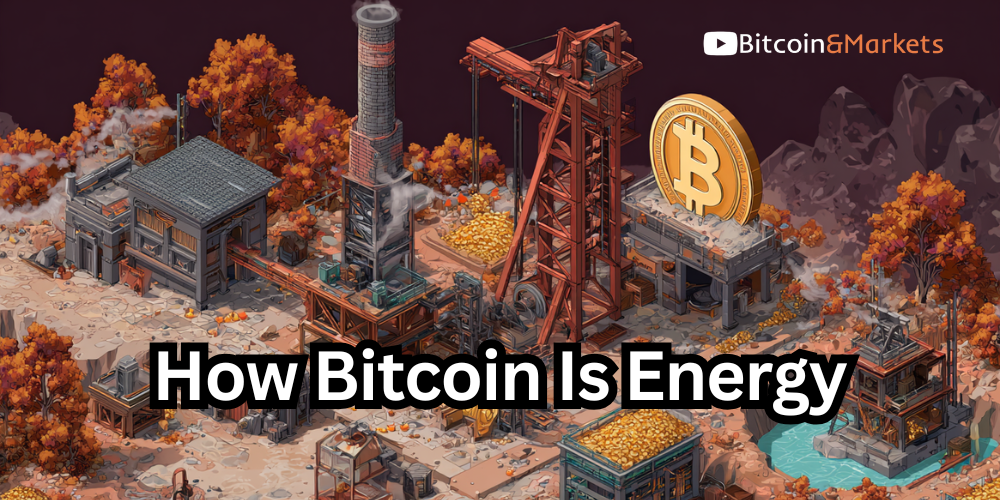
I recently heard an OG Bitcoiner talking about the lack of basic education in today’s market. With so much attention focused on MSTR, ETFs, and ticker symbols, the fundamentals are getting lost. When I saw a post by Keith Weiner, I realized it was a good opportunity to bring the conversation back to first principles.
Keith tweeted an attempt to debunk the claim that “bitcoin is stored energy.” This isn’t a major claim in Bitcoin thought, it’s more of a shorthand phrase used to gesture at a deeper idea about money and store of value. But let’s go with it, because the argument exposes some basic misunderstandings people have about physics, money, and analogies.
A cigarette butt is proof-of-burn. So are ashes of a house in California. So is the greasy residue on a spark plug. And so is a bitcoin.
— Keith Weiner (@RealKeithWeiner) December 22, 2025
To create the butt, the ashes, the residue, and the bitcoin requires that you burn energy.
But only the last one is believed to be energy.
The intended conclusion is that bitcoiners are making a category error—confusing energy consumption with energy storage. But this critique rests on an ill-formed analogy and a misunderstanding of both thermodynamics and monetary theory.
Let’s reset.
The First Law of Thermodynamics states that energy is conserved. It cannot be created or destroyed.
When you burn a cigarette chemical energy becomes heat, light, motion, and ash. There is evidence that this energy conversion has happened, but we only have one fragile byproduct to show for it. The heat and light have dissipated. The energy doesn’t disappear, but transformed byproduct of increased and durable value to utilize.
Heat and light certainly have value, but in this form they cannot be stored, transferred, or reused. However, we can easily imagine chemical processes very close to this discussion where energy expenditure does transform something into something more valuable.
Gold emerges from the ground dispersed, impure, and largely useless. It may even be indistinguishable from worthless material. Turning ore into monetary gold requires substantial energy expenditure through mining, crushing, chemical separation, and high-temperature smelting. The energy used in this process is not destroyed; it is conserved and embedded in the structure and scarcity of the final product.
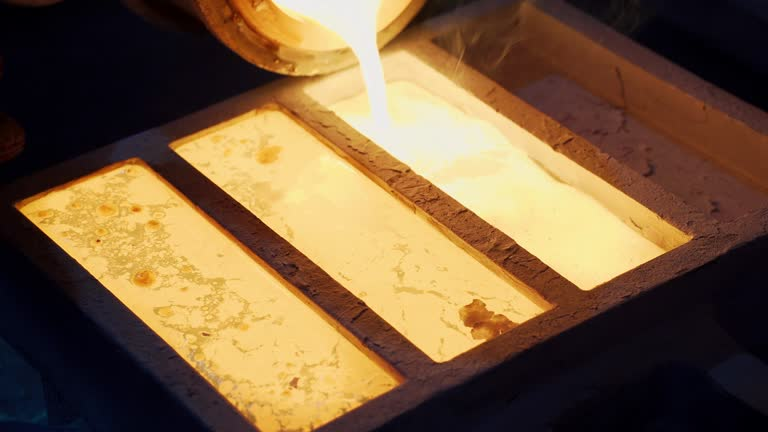
This is why gold is tradeable long after the furnace is cold. The energy is no longer available to do physical work, but it is permanently recorded in a refined material that cannot be recreated without repeating the same energy cost.
Gold, like bitcoin, is not energy itself. It is the conserved economic consequence of irreversible energy expenditure. And that is precisely what makes it sound money.
The Irrelevant Analogy
Keith believes the cigarette analogy is useful for understanding money. But a good analogy must match at least one relevant dimension of the argument. The cigarette-butt analogy fails even on the dimension it targets.
Ash, residue, and cigarette butts are terminal byproducts. They have no ongoing function. They are not recognized as transferable value. They destroy structure rather than preserve it.
Bitcoin by contrast:
- Is not consumed in its creation
- Persists indefinitely
- Is recognized as transferable value, divisible, etc
- Represents a scarcity enforced by irreversible energy expenditure
Bitcoin preserves the economic consequences of the energy expended in its creation. Ash does not.
The analogy is ill-formed. Energy is actually conserved, it's the First Law of Thermodynamics.
— Ansel Lindner (@AnselLindner) December 23, 2025
When you burn the cigarette the energy goes somewhere, and the cigarette is changed. When bitcoin is mined the energy is conserved in the bitcoin, which itself is not consumed.
Money Basics
All economic activity begins with energy. Human labor is the expenditure of metabolic energy. Machines extend that effort through stored and directed energy. Every good or service that exists is the result of energy being applied to matter, time, and organization. Without energy expenditure, nothing is produced.
Money arises as a way to store the economic consequences of that expenditure. It allows value created in the past to be transferred into the future and exchanged across distance and time. Money is not energy itself, but a record of energy expended under conditions of scarcity.
I want to make clear, this is not a labor theory of value. It's not a 1:1 conversion of energy or labor into price. Value is determined subjectively through market prices, which coordinate heterogeneous energy expenditures across time, skill, and demand.
Historically, sound money emerged from materials that required real, irreversible cost to produce. Gold did not become money because it was shiny, but because it was scarce and costly to refine. That cost could not be faked. The resulting metal permanently embodied that effort, making it an effective store of value across time. Nick Szabo called this “unforgeable costliness,” hard to produce, easy to verify.
Some energy expenditure destroys structure and dissipates value. Other expenditure creates durable structure. When energy is expended in a way that creates durable structure, the result persists as value. The energy is no longer usable, but its economic consequence remains.
Bitcoin As Stored Energy
To be clear: bitcoin is not literal energy, just as gold is not literal labor. Bitcoin does not power your home. You cannot release joules from it. No serious Bitcoiner claims otherwise, and Keith likely knows this, I think.
Proof-of-work converts real-world energy into a scarce, verifiable, and durable monetary record. The energy used to mine bitcoin is not “lost”; it is conserved as security, scarcity, and trust minimization. Each unit represents energy irreversibly expended to create something that cannot be duplicated without spending more than the bitcoin is worth. It's economically unfeasible.
Money is the stored consequent of past energy expenditure under scarcity. It preserves the results of real work so they can be exchanged across time and coordinate future production. Bitcoin anchors monetary value to irreversible energy cost in the same way commodity money always has, but it does so digitally, with all the resulting advantages.

Your support is crucial in helping us grow and spread my unique message. Strike or Cash App or becoming a member today and get more critical insights!
Follow me on X @AnselLindner.
I cannot provide this important Bitcoin and Macro analysis without you.
Hold strong and have a great day,
Ansel
- Were you forwarded this post? subscribe here.
- Please SHARE with others who might like it!
- Join our Telegram community
- Also available on Substack.
Disclaimer: The content of Bitcoin & Markets shall not be construed as tax, legal or financial advice.